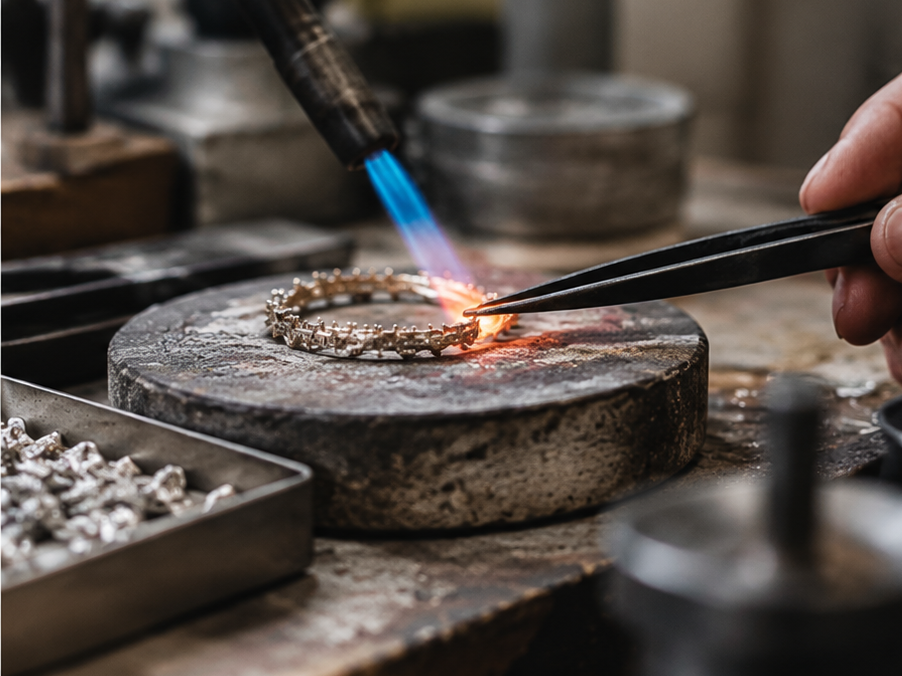
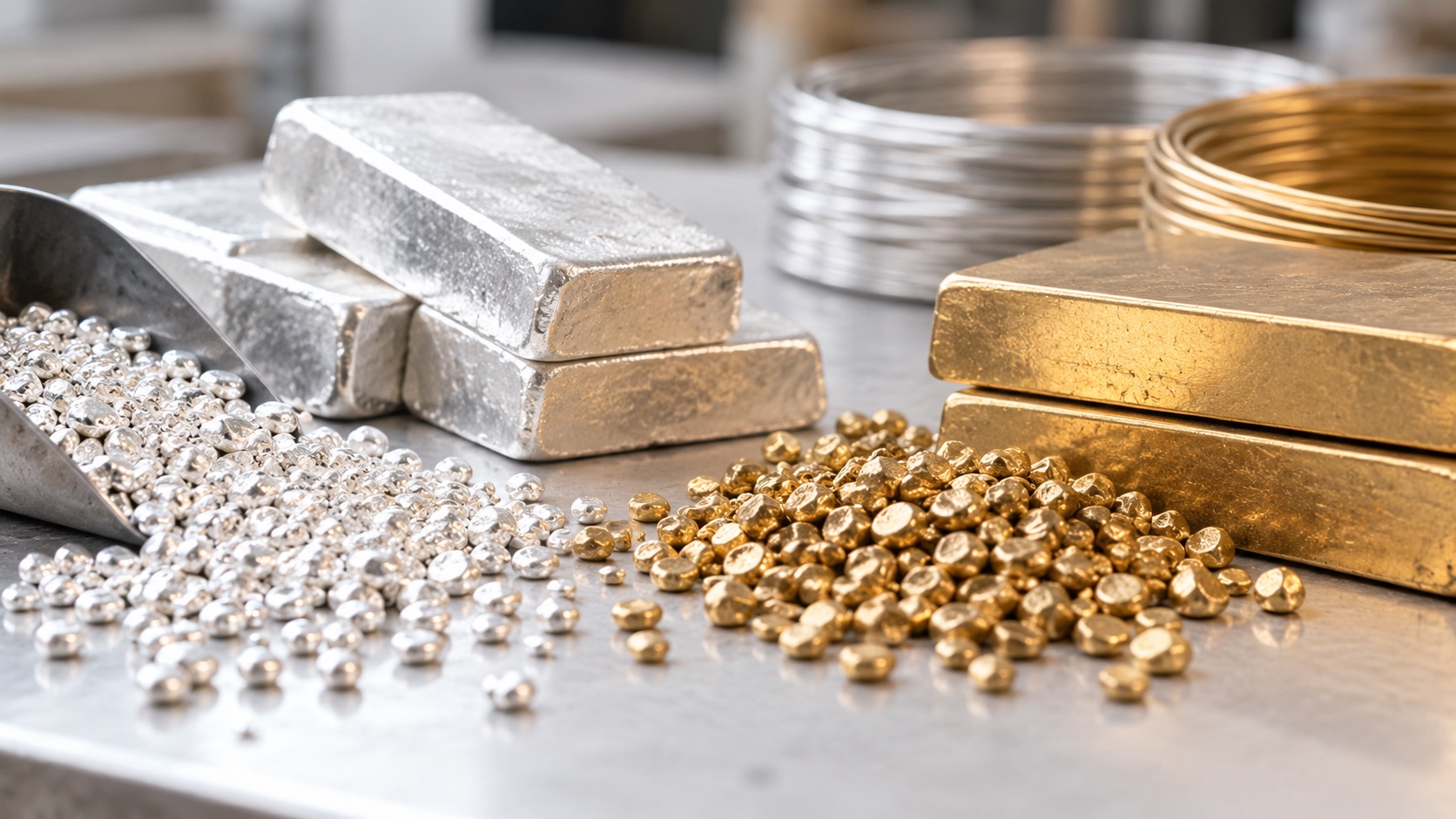
Materials play an important role in determining the structure, appearance, color, and finishing options of jewelry products.
At UHA Jewelry Factory, brass and S925 sterling silver are used in jewelry manufacturing for different product designs and requirements.
Understanding the characteristics of these materials helps customers select ready-stock wholesale jewelry or establish suitable specifications for OEM/ODM production.
Brass Jewelry and Its Applications
Brass is an alloy primarily composed of copper and zinc. It is widely used across various manufacturing industries, including fashion jewelry.
The mechanical properties and workability of brass depend on its alloy composition and material condition.
In jewelry production, brass can be selected for designs that match its characteristics and the intended manufacturing methods.
Brass jewelry can be combined with plating and surface-finishing techniques to achieve different colors, levels of shine, and visual styles.
Designs may include decorative details, assembled structures, or stone settings, depending on the requirements of each product.
When selecting plated brass jewelry, it is important to distinguish the base metal from the outer finish.
S925 Sterling Silver in Jewelry Manufacturing
S925 sterling silver is an alloy containing 92.5% silver, with the remaining 7.5% consisting of other metals.
It is widely used in jewelry products such as rings, necklaces, pendants, bracelets, and earrings.
S925 sterling silver can be manufactured into various designs and combined with decorative stones, depending on product requirements.
Polishing, surface treatment, and finishing methods are selected according to each design.
Sterling silver should be distinguished from pure silver. During use, the surface appearance of silver jewelry may change depending on environmental conditions and care.
Jewelry Plating and Surface Finishing
In addition to the base material, plating and surface finishing contribute to the color, shine, and overall appearance of jewelry.
Depending on the material and design, jewelry may feature gold-tone, silver-tone, rhodium-plated, or other suitable surface finishes.
Finishing processes may include polishing or matte surface treatments to achieve the desired appearance.
An outer finish does not change the underlying metal into solid precious metal. For example, silver-tone plated brass remains a brass-based product.
The characteristics and durability of a finish depend on the actual treatment applied and the conditions in which the jewelry is used.
Choosing Materials for Wholesale or Custom Jewelry
For wholesale customers, understanding the material, surface finish, and product category helps identify suitable jewelry for their target markets.
For brands developing OEM/ODM products, material selection should be considered during the design stage to support an appropriate manufacturing approach.
Other factors, including dimensions, structure, decorative stones, color, and finishing requirements, should also be discussed.
UHA Jewelry Factory offers a wide selection of ready-stock wholesale jewelry and provides custom OEM/ODM jewelry manufacturing services.
Contact UHA to explore available jewelry designs or discuss brass, S925 sterling silver, and finishing options for your products.