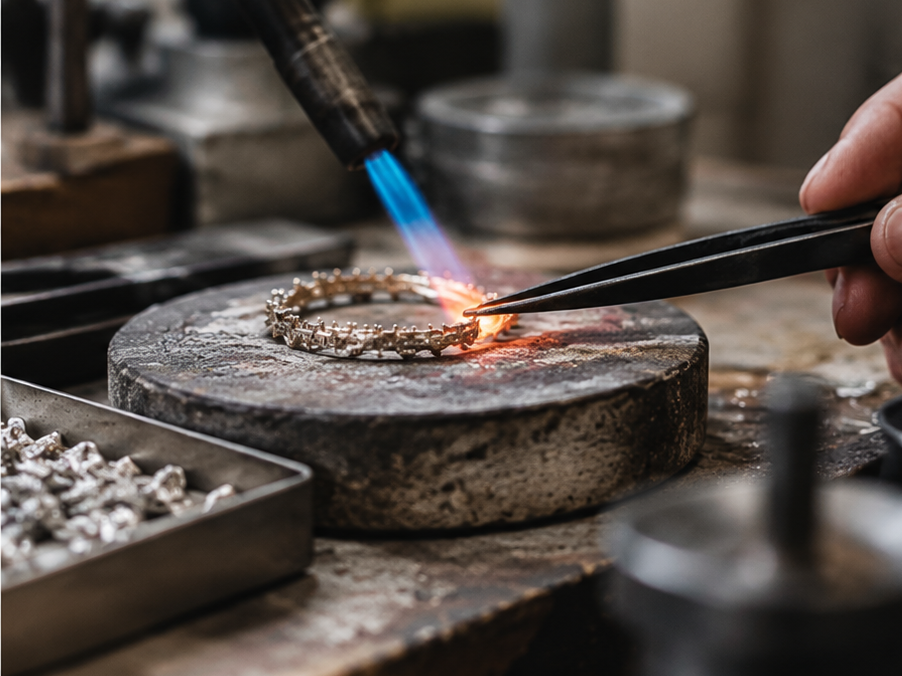
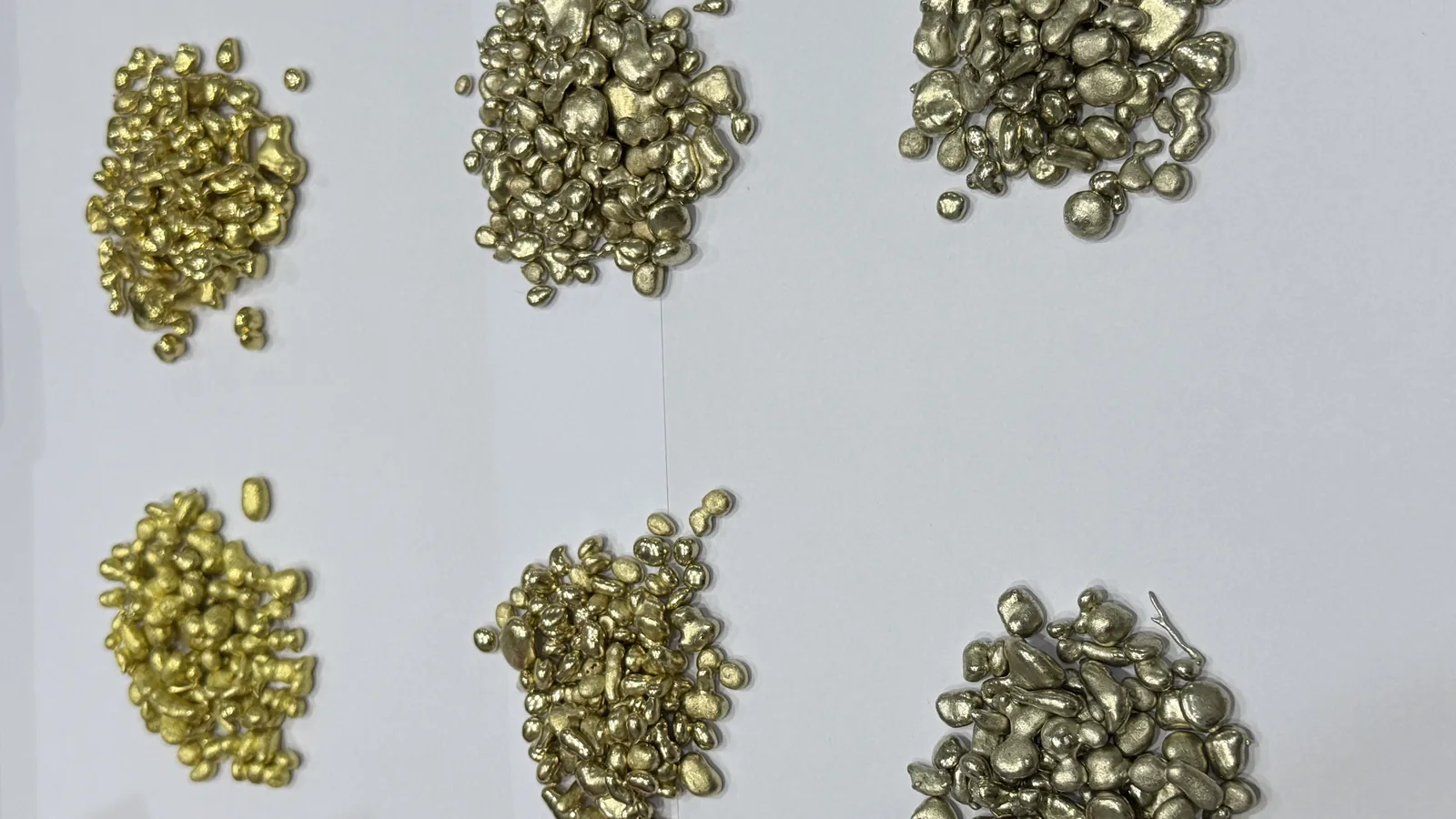
Copper and copper-based alloys are widely used in fashion jewelry manufacturing, including rings, earrings, pendants, bracelets, and jewelry components.
However, not every copper material is equally suitable for jewelry casting. Two materials both described as brass can behave very differently when melted and cast into finished shapes.
The difference goes beyond color or raw-material price. Alloy composition, casting characteristics, and the technical requirements of each design all matter.
At UHA FACTORY, production materials include brass and S925 sterling silver. This article focuses specifically on copper and brass alloys used in jewelry casting.
So which copper alloys are suitable for casting jewelry, and how do ordinary metal rods differ from purpose-made casting granules?
1. Why Does Alloy Selection Matter in Jewelry Casting?
Lost-wax casting is a widely used method for producing jewelry with detailed shapes and intricate patterns.
Molten metal must fill small features such as stone-setting prongs, decorative lines, ring walls, and sections with different thicknesses.
When the alloy is unsuitable or casting conditions are not properly controlled, the results may include:
- Incomplete filling in thin or detailed areas.
- Gas porosity or shrinkage porosity during solidification.
- Small pits that become visible during surface finishing.
- Cracks or other defects in structurally important areas.
- Uneven surface quality between cast pieces.
These defects can complicate subsequent finishing, stone setting, and plating. In larger production runs, they can also increase rework and rejection rates.
Selecting an appropriate alloy is therefore an important part of controlling quality from the casting stage onward.
2. Are Pure Copper, Brass, and Bronze the Same Material?
The word copper is sometimes used broadly, but different copper-based materials have distinct compositions and properties.
Pure Copper (Copper)
Pure or high-copper-content metal has a characteristic reddish-orange appearance.
Pure copper melts at approximately 1,084°C and can be cast using suitable methods.
Nevertheless, higher copper purity does not automatically mean better casting performance than a purpose-designed alloy.
For detailed jewelry, manufacturers must consider mold filling, oxidation, and the properties of the resulting casting.
Brass
Brass is an alloy primarily composed of copper (Cu) and zinc (Zn). Depending on the grade, other elements may also be present to achieve specific manufacturing properties.
Brass is widely used in fashion jewelry because it can be worked and given different surface finishes.
Yet brass alloys are not all developed for the same process. Some are intended primarily for machining, rolling, drawing, or stamping, while others are formulated for casting.
Differences in alloy composition can significantly affect casting behavior and the surface quality of the finished part.
Bronze
Traditionally, bronze refers to copper-tin alloys. The broader group also includes alloys such as silicon bronze.
Certain bronze alloys are used for decorative objects, sculpture, and jewelry casting. As with brass, suitability depends on the specific alloy and the manufacturing method.
For an overview of materials used in production, see Brass and S925 Sterling Silver in Jewelry Manufacturing.
3. Can Copper or Brass Rods Be Used for Jewelry Casting?
Copper and copper-based alloys are often sold as rods or bars. Rod stock can include a range of different alloy grades.
In mechanical manufacturing, many rod and bar alloys are intended for turning, milling, drilling, and other machining operations.
Certain free-machining alloys are optimized for cutting rather than for investment casting of intricate jewelry.
For example, C36000 brass is a free-machining grade that contains lead to improve machinability. Its properties and intended use should not be assumed to match those of a jewelry casting alloy.
Selecting a material simply because it is labeled “brass,” without checking its composition and intended use, can make casting quality harder to control.
Before melting rod stock for jewelry casting, a manufacturer should verify the alloy specification and whether it is appropriate for the chosen casting process.
How Does UHA FACTORY Use Rod Stock?
At UHA FACTORY, rod stock is used to make sprue or feed attachments on master models during mold preparation.
However, UHA does not use the ordinary rod stock employed for this purpose as the metal feedstock for casting jewelry products.
Based on UHA's production experience, unsuitable feedstock can contribute to casting defects, including pits that become apparent on the product surface during finishing.
This is why UHA distinguishes between metal used as a supporting material in mold preparation and the alloy melted to produce the jewelry itself.
4. What Are Specialized Brass Casting Granules?
Specialized brass casting granules are copper-alloy feedstock supplied in granular form, with a composition and properties selected for casting applications.
Depending on the alloy, characteristics relevant to jewelry casting may include:
- The ability to fill small details.
- Suitable melting and solidification behavior.
- The ability to control casting defects.
- Appropriate hardness and workability after casting.
- Surface quality suitable for polishing and plating.
Using an alloy developed for casting provides a stronger basis for setting and controlling casting conditions.
The physical form of the feedstock should not be confused with the alloy's properties. Granules are not automatically suitable for jewelry casting simply because they are granular. Conversely, a casting alloy may also be supplied as cut bars or ingots.
The key factors are alloy composition, documented application, and compatibility with the manufacturing process—not the shape in which the material is sold.
5. Why Might Different Brass Jewelry Designs Require Different Alloys?
This is an important consideration in production.
A ring with tiny decorative details has different technical requirements from a large, broad-surfaced pendant or a thick metal component. The alloy should be selected with the specific design in mind.
Fine Details and Thin Sections
Stone-setting prongs, intricate patterns, and thin walls require molten metal to fill narrow and complex areas. Alloy selection, product design, and casting conditions all affect the ability to reproduce those details accurately.
Large Surface Areas
With broad visible surfaces, even small casting defects may become noticeable during polishing. Consistent surface quality therefore becomes especially important.
Thick Sections
Thicker metal areas require attention to solidification and the supply of molten metal during cooling. Inadequate feeding can result in shrinkage porosity.
UHA FACTORY's Material-Selection Experience
UHA uses more than one type of specialized brass casting material and selects the appropriate option according to product design, surface area, thickness, and finishing requirements.
Rather than relying on a single brass alloy for every design, UHA considers material selection as part of its broader manufacturing approach.
Material selection alone is not enough: design, alloy, and casting conditions must also work together to achieve the required result.
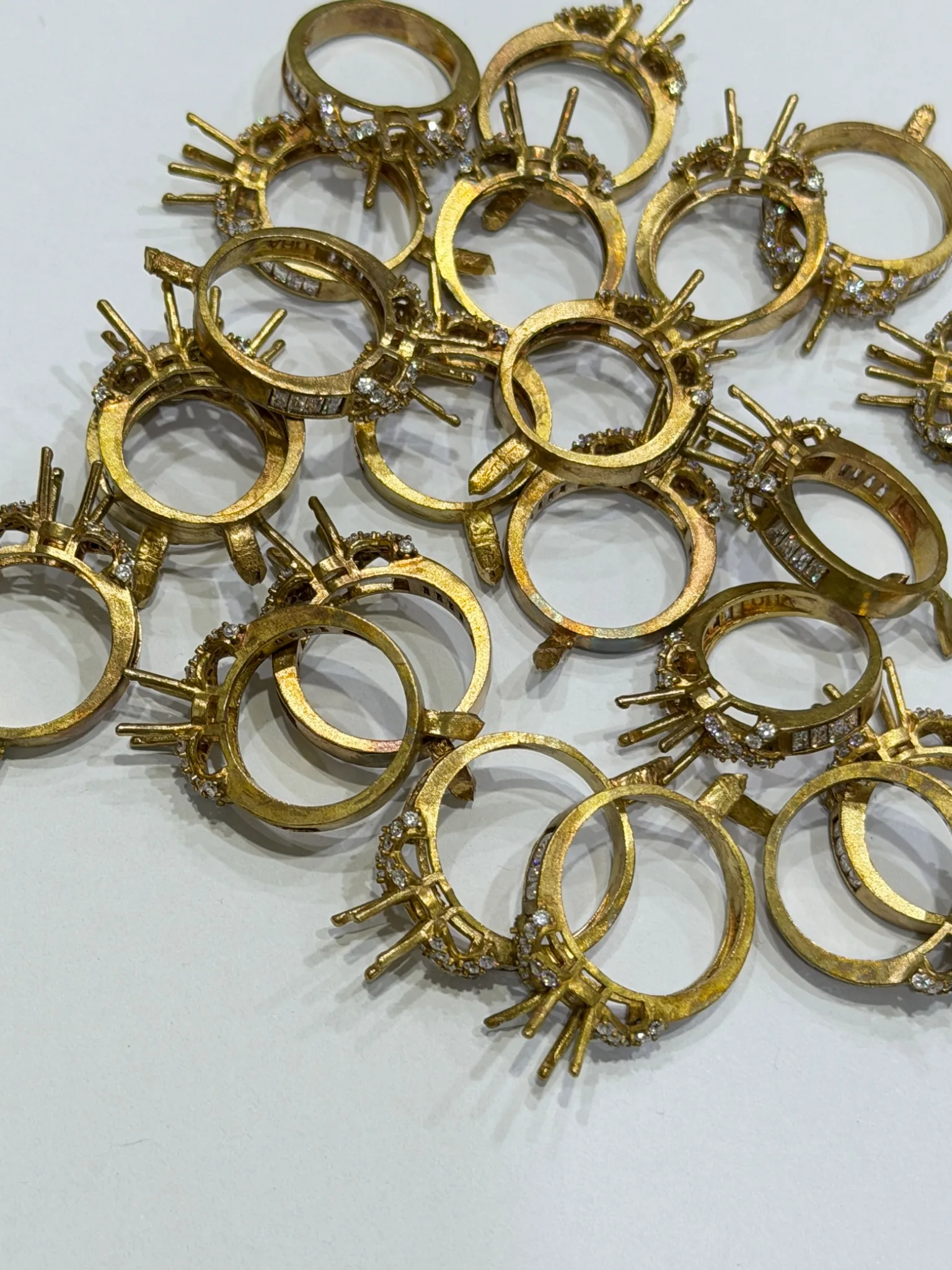
6. Why Do Porosity Defects Occur in Cast Jewelry?
Porosity is a common type of casting defect, but not every visible pit has the same cause.
Gas Porosity
Gas porosity may form when gas becomes trapped in molten metal or is generated through reactions during casting.
As the metal solidifies, gas can leave small voids inside the casting or at its surface.
Relevant factors may include the condition of the feedstock, melting temperature, melting environment, and interactions between the metal and the mold.
Shrinkage Porosity
Shrinkage porosity occurs when metal contracts during solidification without sufficient molten metal feeding the affected area.
It is often associated with product geometry, thicker sections, and solidification conditions.
Inclusions and Mold-Material Defects
Oxides, contaminants, or particles from the mold can also create defects in a casting.
Some defects become apparent only after cooling, adjustment, or polishing.
A visible pit should therefore be investigated rather than automatically labeled “gas porosity” or blamed entirely on poor-quality metal.
Choosing a suitable alloy helps reduce the risk of defects, but it does not replace control over the casting process.
7. How Does Casting Quality Affect Jewelry Plating?
For brass jewelry finished with gold or rhodium plating, the quality of the underlying metal surface matters.
After casting, a product may undergo surface preparation, polishing, assembly, and plating, depending on its design.
If the base metal contains many pits, cracks, or other surface defects, it may be difficult to achieve a consistent finish.
Such defects can also affect the appearance of the plated product.
Plating quality therefore depends not only on the outer coating but also on the condition of the metal component produced during casting.
8. What Should Brands Consider When Choosing Brass for Jewelry Casting?
For businesses and jewelry brands commissioning custom manufacturing, material selection should be assessed together with product specifications.
Important considerations include:
- Alloy composition: Is it suitable for the intended manufacturing process?
- Design characteristics: Does the product have fine details, thin walls, large surfaces, or thick sections?
- Quality requirements: What surface finish and dimensional accuracy are expected?
- Subsequent operations: Will the product need adjustment, assembly, stone setting, or other post-casting work?
- Plating requirements: What coating type and surface standard are needed?
- Chemical requirements: Does the material meet the applicable requirements of the intended market?
For new designs or unusual technical requirements, evaluating a prototype can help determine an appropriate material and production approach before a larger order is placed.
Businesses developing their own collections can learn more about UHA FACTORY's OEM/ODM jewelry manufacturing services.
9. Jewelry Manufacturing at UHA FACTORY
UHA Jewelry Factory is a jewelry manufacturer based in Ho Chi Minh City, Vietnam. The factory supports OEM/ODM production for jewelry shops and brands using existing samples or custom designs.
Materials used by UHA include brass and S925 sterling silver. For custom silver products, UHA also accepts requests for silver fineness other than S925, subject to project requirements.
For brass jewelry casting, UHA prioritizes specialized granular casting materials and selects suitable alloys according to each product's characteristics.
Beyond raw materials, product quality depends on design, mold making, casting, polishing, assembly, plating, and quality control.
UHA manufactures jewelry categories including rings, earrings, pendants, necklaces, bracelets, bangles, and other jewelry accessories.
Customers can explore UHA's wholesale rings and custom ring manufacturing and earrings collection and manufacturing options.
For OEM/ODM inquiries, sharing a design reference, dimensions, estimated quantity, and finishing requirements helps the factory assess a suitable manufacturing approach.
10. Frequently Asked Questions About Copper Jewelry Casting
Can brass rods be used for jewelry casting?
Yes, if the specific alloy is suitable for the intended casting process. However, ordinary rod stock made for machining should not automatically be treated as jewelry casting feedstock. UHA does not melt the ordinary rods it uses for mold-making attachments to cast jewelry products.
Can specialized brass casting granules help reduce porosity?
An appropriate casting alloy may help reduce the risk of defects. However, gas porosity and shrinkage porosity also depend on design, melting conditions, feeding, and solidification.
Is purer copper always better than a purpose-designed brass casting alloy?
Not necessarily. Purity alone does not determine castability. For some jewelry designs, a properly selected casting alloy can be more suitable than pure copper.
Conclusion
Not every copper material is equally suited to jewelry casting, especially for complex designs or products requiring high surface quality.
The important question is not simply whether the feedstock is described as pure copper, rod stock, or granules. It is whether the alloy's composition and casting properties are appropriate for the manufacturing method and the product's requirements.
At UHA FACTORY, choosing specialized brass casting materials to suit individual designs forms part of its approach to production quality control.
Selecting suitable materials is an important first step toward consistent quality in cast jewelry.