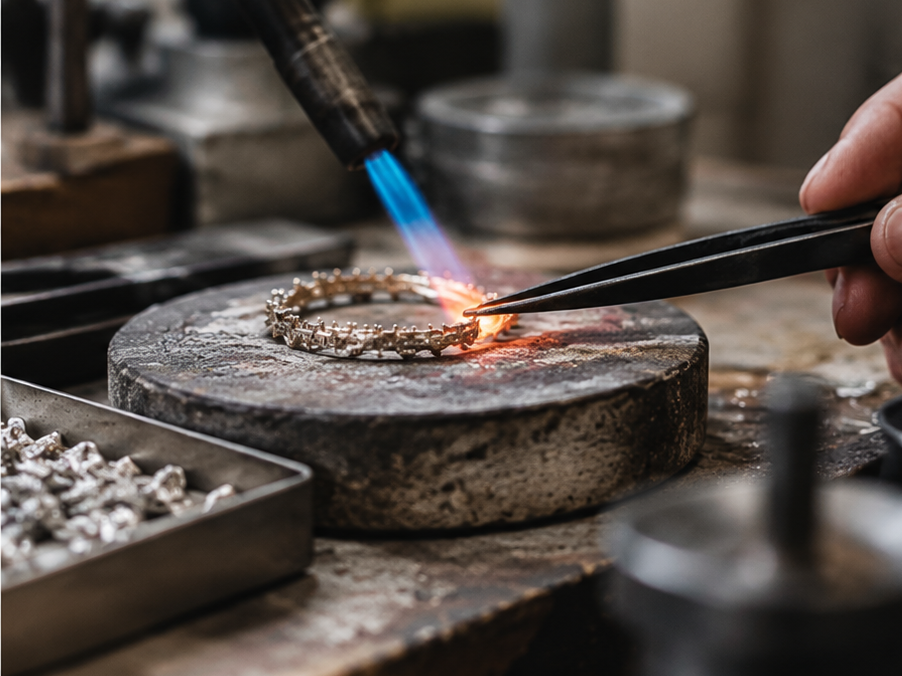
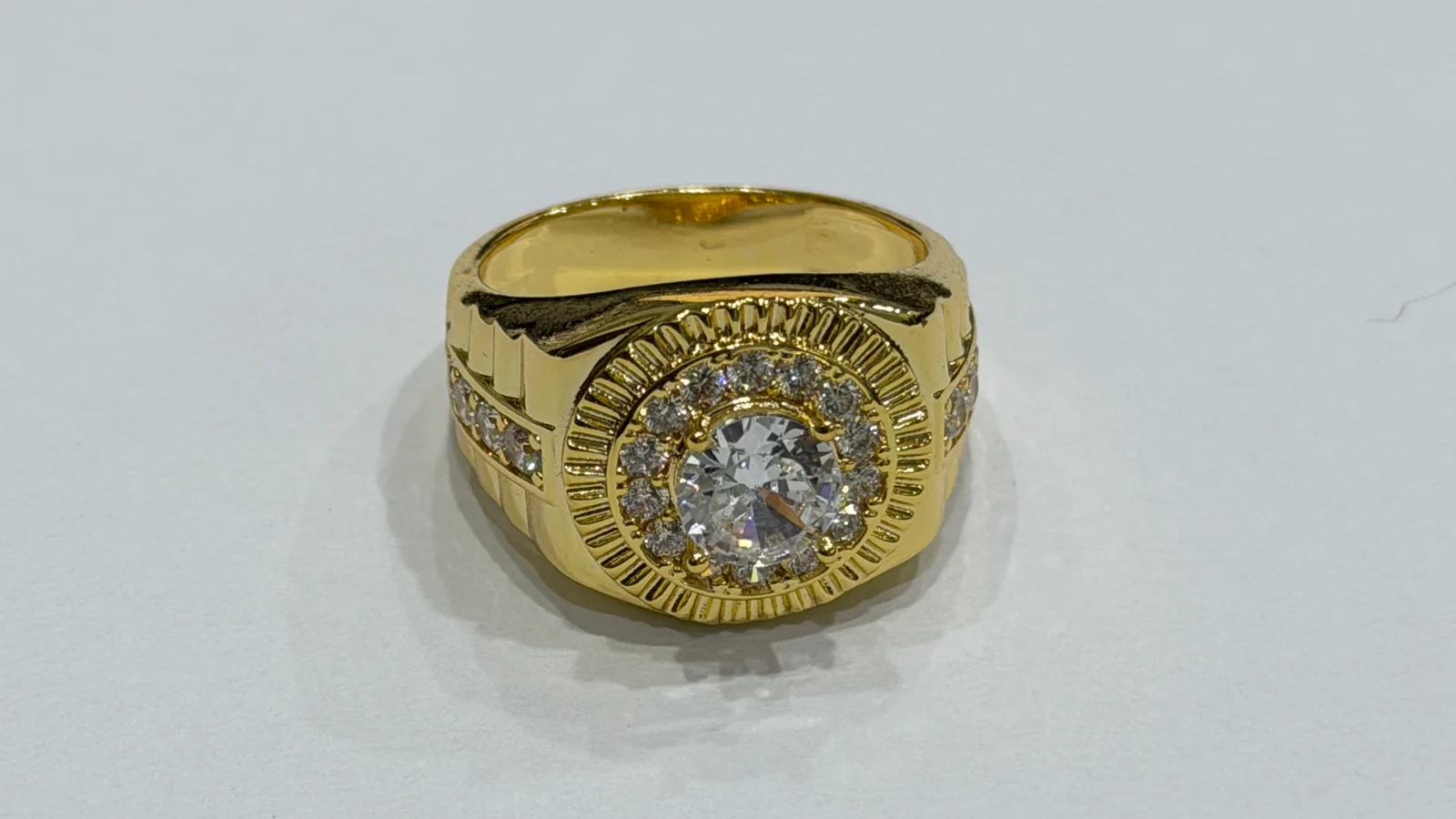
Yes. Both pure copper and copper alloys such as brass can darken when exposed to air, even before a piece has been worn. For jewelry retailers and brands, that matters as much in storage and display as it does after a sale. When approving a production sample, review the plating thickness and any protective topcoat alongside the color.
What makes copper and brass jewelry darken?
At room temperature, oxygen in the air can react with bare copper to form a very thin film of copper(I) oxide, or Cu₂O. The film may be invisible at first. As the surface layer develops, the metal can lose its shine and take on a dark brown or nearly black appearance. Pure copper is susceptible to this reaction too. Humidity and residue from handling, such as fingerprints or perspiration, can also influence how the surface changes. Research on atmospheric corrosion of copper · Canadian Conservation Institute
What do plating and clear e-coating do?
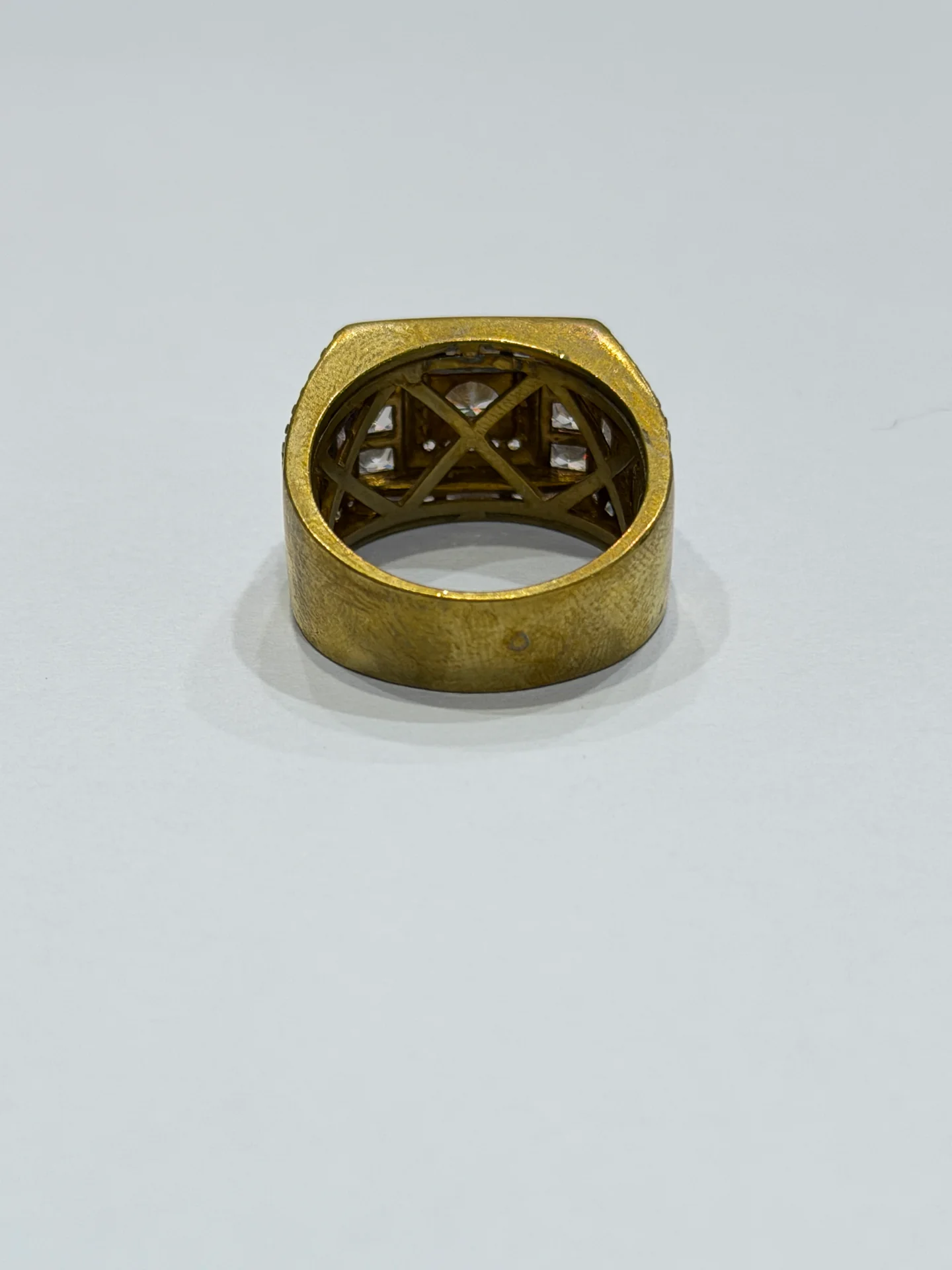
Plating gives a piece the specified color and luster. While intact, it also helps shield the underlying metal from direct exposure. With the same plating system and comparable use, a thicker layer generally takes longer to wear through. It usually costs more because it requires more plating material and processing time. That trade-off matters especially for rings and bracelets, which are more likely to rub against desks, sleeves, or other jewelry.
Clear electrophoretic coating, or e-coating, adds a transparent protective film over the plated surface. An electric field deposits the coating onto the conductive surface, and the film is then heat-cured. The plated color stays visible through the clear coat, which helps protect the finish from moisture and light rubbing. Specify plating thickness and the clear topcoat separately when approving samples.
Common care mistakes and how to avoid them
For retailers and wholesalers. Avoid packing several pieces loose in the same pouch, where they can rub during transit or storage. Keep stock dry and use individual pouches or soft dividers. Wipe display pieces gently with a dry, soft cloth after handling.
For customers. A short care card can ask customers to put jewelry on after applying perfume or lotion, take it off before swimming, showering, or exercising, and wipe it dry before storing it. Avoid polishing compounds, harsh cleaners, and abrasive cloths on plated finishes.
How UHA supports retailers and brands
During sample development, UHA Jewelry Factory can discuss the base metal, plating color and thickness that fit the design, intended use, and target price. You can also specify individual packing to reduce rubbing in storage and transit.
Read more about copper alloys for jewelry casting
Frequently asked questions
Can bare, pure copper turn dark? Yes. Its surface can oxidize in air. How soon the change becomes visible depends on the conditions in which the piece is used or stored.
Can a gold-plated brass ring still tarnish? Yes. Areas that rub frequently, such as the underside of a ring band, can wear through first. The exposed brass can then darken.
How long will thicker plating last? Under comparable conditions, thicker plating generally takes longer to wear through. Actual wear also depends on the plating system, topcoat, and how often and where the piece rubs.
Discuss your next order with UHA
Developing a collection or sourcing jewelry for wholesale? Send reference images or drawings, estimated order quantities, the finish you want, and how the pieces are intended to be worn. UHA can discuss finish and packaging options for each style. Talk to UHA about OEM/ODM jewelry manufacturing